LiFePO4 vs NMC: which battery should your power station have?
Updated Oct 3, 2026
We may earn a commission when you buy through links on this page. As an Amazon Associate I earn from qualifying purchases.
Nearly every power station released in the last few years uses LiFePO4 (lithium iron phosphate, also called LFP) cells. Older models and some premium brands used NMC (nickel manganese cobalt). The difference mostly affects how long the station lasts.
Cycle life: the big difference
A "cycle" is one full discharge and recharge. LiFePO4 stations are typically rated for 3,000–4,000 cycles before dropping to 70–80% of original capacity. NMC stations are often rated for about 500–1,000. Used daily with solar, that's roughly ten years versus one to three.
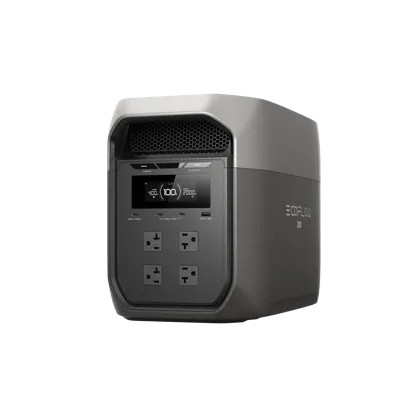
Multiply capacity by rated cycles and you get a rough figure for the total energy a station can deliver in its life. For example, the 1,024 Wh EcoFlow DELTA 3 Plus is rated for 4,000 cycles, about 4,100 kWh. The 1,516 Wh Goal Zero Yeti 1500X (NMC, 500 cycles) works out to about 760 kWh. See the full ranking in longest-lasting power stations.
Safety and temperature
LiFePO4 chemistry is more thermally stable than NMC and much less prone to overheating. That's a big reason manufacturers switched. Both types are managed by a battery management system that limits charging in freezing temperatures, so check the operating range if you camp in winter.
Weight: where NMC used to win
NMC stores more energy per pound, which is why it dominated early lightweight models. Modern LFP stations have largely closed the gap through better packaging. Several 1 kWh LFP units now weigh under 25 lb.
Which should you buy?
For almost everyone: LiFePO4. Choose NMC only if you find a heavily discounted unit you'll use occasionally, such as for a few outages a year, where cycle life barely matters.
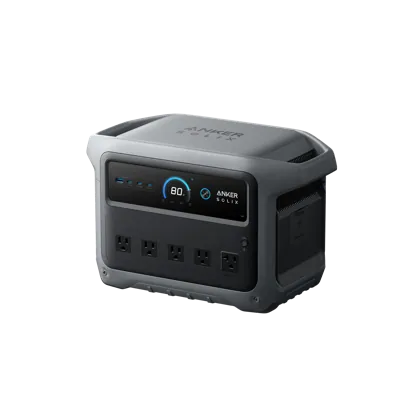
Anker · Mid-size
SOLIX C1000 Gen 2
- 1,024Wh
- 2,000W out
- 24.9lb
The fastest-charging 1 kWh station here (49 minutes from the wall), with 2,000 W output, 4,000 cycles and a 10 ms UPS, at under 25 lb.
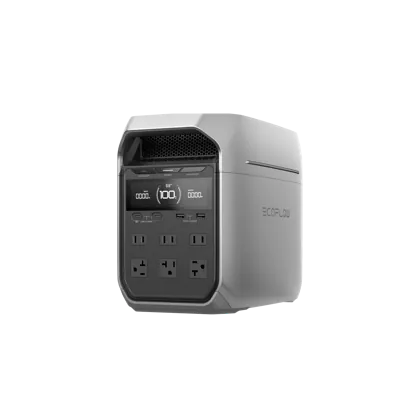
EcoFlow · Mid-size
DELTA 3 Plus
- 1,024Wh
- 1,800W out
- 27.6lb
The DELTA 2’s successor: same 1 kWh size, but 4,000 cycles, double the solar input (1,000 W), 140 W USB-C and expansion to 5 kWh.
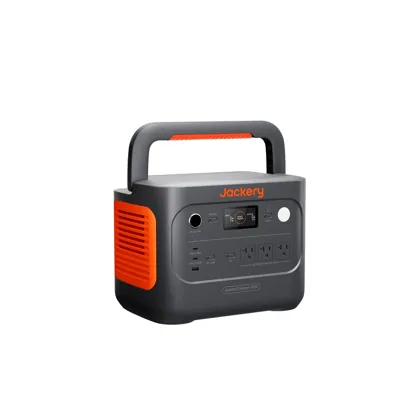
Jackery · Mid-size
Explorer 1000 v2
- 1,070Wh
- 1,500W out
- 23.8lb
One of the lightest 1 kWh LiFePO4 stations, with a 4,000-cycle rating. It has fewer AC outlets than rivals.
As an Amazon Associate I earn from qualifying purchases.